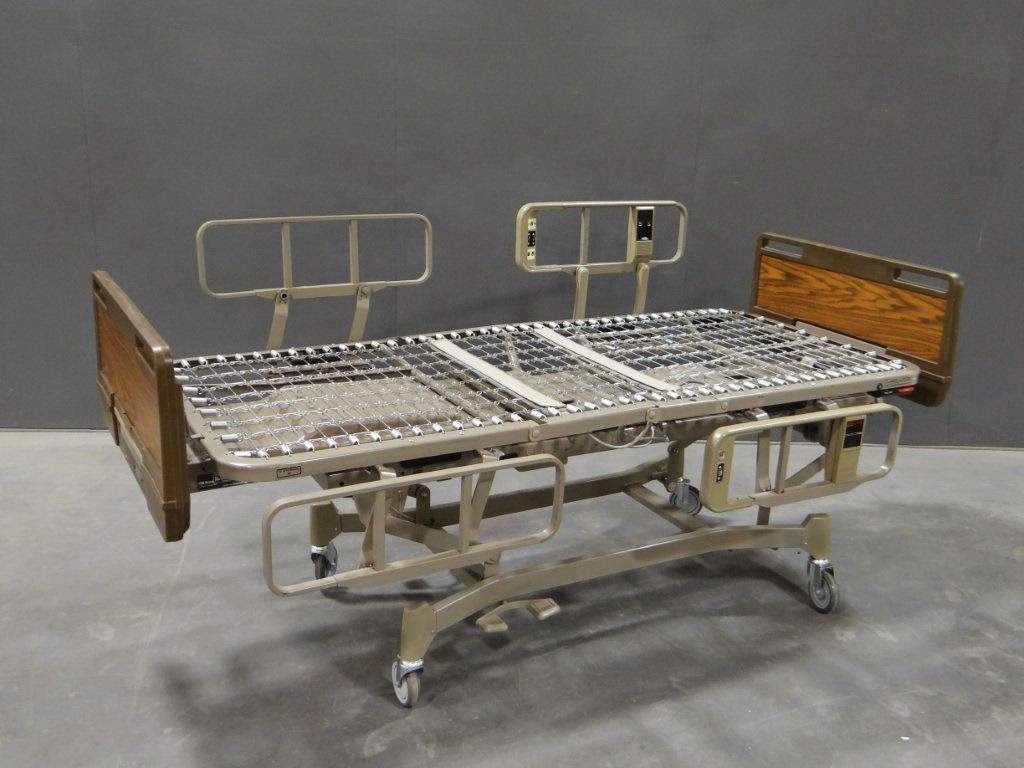
We have the largest variety of used hospital beds for sale. We have over 70,000 in stock of Hill Rom and Stryker electrical hospital beds for sale. You can view all our products online at www.piedmontmedicalinc.com
Stryker Secure
II Hospital BED is an intelligent design. It is the result of extensive field customer
feedback. The Secure II hospital bed is
a full-featured medical surgery hospital bed that combines practical
engineering with smart bed technology to help provide a patient platform that
not only meets patients' needs, but also the needs of those who care for them
(Hospital Nurses).
Features such
as a retractable bed frame, centrally-located brake, intermediate side rail
positioning and open architecture design help deliver convenience, flexibility
and unmatched level of safety for both patients and caregivers.
We currently have
100 new units of the Stryker Secure II EX with upgraded iBed Awareness (This is
a new form of a nurse call system)
www.PiedmontMedicalinc.com
is the largest reconditioning hospital bed company in the USA and we have the
largest inventory of used and reconditioned hospital beds in the medical devices
market. We refurbished all the beds in AMERICA.
Hospital Stretchers are indispensable medical devices
www.PiedmontMedicalinc.com
1.800.433.3255
Hospital Stretchers are medical devices that are used for carrying patients who require medical attention. These are also used in emergency medical situation outside of the hospitals, by military services and also by search and rescue personnel. A stretcher is a mobile device that can be used for the transportation of a patient from place to another. There are various types of stretchers commercially available namely EMS stretchers, folding stretchers, simple stretchers, scoop stretcher, stroke basket, reeves stretcher and hospital stretcher.
• Simple stretchers are the most elementary type of stretcher and were earlier used by military people
• Folding stretcher also known as top deck and collapsible stretcher is an advanced form of simple stretcher, but comprise of hinged points that can be collapsed in for a compact form
• Scoop stretchers are used for lifting patients from the ground to the ambulatory stretcher
• Reeves stretcher also referred as flexible stretcher is primarily used to move patients from narrow spaces
• EMS stretchers are used in ambulances which make the transportation of the patient easier
Stretchers are often used by the hospitals and serve as an indispensable tool for the safety and security of an injured person. The device provides an ease of transportation and accessibility for the medical team. The market for hospital stretcher is projected to rise with an increase in elderly population, rise in number of accidents and increasing number of surgeries.
This motor bed has an overall length of 36.5” x 88” (this without the bumpers). The sleep surface measures 36” x 80” and the bed frame clearance is 7.5” (this is with 5” casters). The Hi-Lo travel time is 21 seconds.
The low position is 17” and the high position is 30”. Additional features include steer and central brake. Other optional features of the bed are an orthopedic surface, parallelogram side rails and radio / TV. A mattress, roller bumpers, bed exit and neutral paint colors can be added too.
The Centra Series 850/852 Med-Surg motor bed has an overall length of 36” x 82” without the bumpers. The sleep surface is 36”x 82”. The Hi-Lo travel time is 21 seconds and the bed frame clearance is 7.5” (this is with 5” casters).
The high position is 31” and the low position is 17”. This manual operation bed has central brake and steer. Other features include a night light, TV, bed exit and CPR release. Hard pan surface and mattress are also options.
The Centra Series 1060/1062 motor bed has 5” casters, with the high and low positions at 31” and 17”, respectively. The sleep surface is 36” x 82” and comes with a steer and central brake. CPR release, night light, radio, and side rails are among its other features.
The Century Critical Care has a sleep surface of 33" X 80". The width is 38.5"when the side rails are up. When the side rails are down, it is 34". The overall length of the bed is 36" X 91" with the bumpers.
The radiolucent window is 20" W X 37" L. The low position is 22.5" and the high position is 40.5". The bed has central brake and steer, instant CPR release and hydraulic with electric asset. Optional features are sideguard communications, light paint, zone air / upgrade kit and Tente casters.
The Advance Series Med-Surg Bed has a sleep surface of 36" x 82"and overall length of 36" x 91" (minus the bumpers). The bed frame clearance is 7.5”.
The Affinity II has a sleep surface of 34” x 78” and 6” casters. The low position is 18.5” and the high position is 35.75”. It has central brake and steer and can be fitted with custom head boards. Other features are V-Cut or C-Cut mattresses, placenta pan, air sleep surface, calf and foot supports.
The Affinity III Birthing Bed has a sleep surface of 34” x 78” and 6” casters. The low position is 18.5” and the high position is 35.75”. It has central brake and steer and can be fitted with custom head boards. Other features are V-Cut or C-Cut mattresses, placenta pan, air sleep surface, calf and foot supports.
Note:
It should be stressed that not all hospital beds have these features. The amenities one will find depend on the hospital. The economic status of the city also determines the amenities of their hospital beds.
The dimensions of a hospital bed will continue to change and improve. As medical facilities change, so do the bed specs. The new upcoming hospital bed from Piedmont 361 will change the way we see hospital beds.
Piedmont Medical has the largest stock of used hospital beds in the market. Find more at www.PiedmontMedicalinc.com
Friday, October 31, 2014
Hill Rom Hospital Stretchers from Piedmont Medical
We specialized in Medical Equipment Products. We have the largest variety of hospital Stretchers in Stock.
To View more Stretchers online visit our website at www.piedmontmedicalinc.comor you can view our videos at our youtube channel at https://www.youtube.com/piedmontmedical
Well, Hospital Beds safety should include plans for testing the hospital bed at least once a week.
Testing may be appropriate when (1) there is reason to believe that some components are worn (e.g., rails wobble, rails have been damaged, mattresses are softer) and could cause increased spaces within the hospital bed system, (2) when accessories such as mattress overlays or positioning poles are added or removed, or (3) when components of the hospital bed system (e.g., new bed rails or mattresses) are changed or replaced.
Please review our Video of the Hospital Bed Reconditioning Process to see how extensive is our (www.PiedmontMedicalinc.com) reconditioning process:
Hospital Bed Reconditioning Process
Please feel free to contact us for more information about our products:
Home hospital beds serve a very important purpose. They
provide families with the ability to care for their loved-ones at home instead
of placing them in an extended-care facility. In addition to providing family
members with a very loving level of care, families are still able to provide
family members with quality care when affordability becomes an issue.
Home Hospital Beds …. Selecting the Right Bed
Although families can sometimes select the type of bed they
feel will best serve their loved-one’s needs, in some cases their options
become limited to the type of bed prescribed by the patient’s physician. When
the bed is to be used on a short-term basis, by a patient who is recovering
from major surgery, families can choose a manual, semi-electric, or fully
electric model. As long as the bed provides the ability to raise and lower the
head and feet it should fit the patient’s needs just fine.
How to determine what kind of hospital bed you will need
In the case of dementia patients families should consider a
fully electric model that can be lowered very close to the floor, equipped with
side-rails. Patients who will need long-term care, such as individuals with
burn and spinal cord injuries, will be prescribed a specific type of bed by
their physicians.
Selecting the Right Mattress for your Hospital Bed at Home
Selecting the right mattress for the home hospital bed is
very important. Depending upon the patient’s needs, families can choose from:
Standard Mattresses
Air Mattresses
Therapeutic Mattresses
The most commonly used standard mattress is the standard
model, available with foam or inner spring construction. Air and therapeutic
mattresses are similar in purpose; they are designed to reduce the amount of
pressure placed on the patient’s body. They can use either air of foam to
accomplish this goal, some models use microprocessors to control their constant
deflating and inflating.
Selecting the Right Accessories for your Home Hospital Bed
There are a number of accessories available for home
hospital beds. The trapeze, for example, is designed to either assist the
patient in shifting their position in bed or move from the bed to a chair. One
style of trapeze is mounted directly onto the bed’s frame. It enables the
patient to re-position themselves while lying in bed, as well as assist them in
moving them to and from the bed.
A trapeze
A free-standing trapeze can be moved throughout the room,
they assist the patient in movement once he/she is sitting in a chair. Unless
the patient is ambulatory, able to join the family for meals, an “over bed”
table will be needed. This accessory is available in several different models,
some offering several angle positions to make it easier for the patient to eat
or perform other activities.
Bedside cabinets come in a number of styles, the most common
containing three-drawers. These units are used to store the patient’s personal
items as well as items which are used throughout the day for patient care.
Piedmont Medical can make your life easier
The accessories you choose, like the bed and mattress,
should meet the needs of the patient and caregiver. Any extra that would be
able to fulfill a particular medical need, or make it easier to care for the
patient, should be considered.
A home care hospital bed is capable of supporting patients for both long and short term care. Home care hospital beds are primarily used in home settings where a patient is either confined to a bed with an impaired ability to raise their head or legs. A home care hospital bed can also be used for short term patients recovering from surgery.
A home care hospital bed is a great alternative for patients who need the functionality of a hospital bed without the need to remain in the hospital. It can help reduce medical expenses, aid in the healing process, and reduce the amount of time spent in the hospital. Determining the type of bed you need is not difficult; a patient’s strength, size and abilities need to be considered. Piedmont Medical is one of the largest re-conditioners of Home Care Hospital Beds.
We have the largest hospital bed variety to choose from:
Secure II's intelligent design is the result of extensive field feedback. Secure II is a full-featured med/surg bed that combines practical engineering with smart bed technology to help provide a patient platform that not only meets patients' needs, but also the needs of those who care for them. Features such as a retractable bed frame, centrally-located brake, intermediate siderail positioning and open architecture design help deliver convenience, flexibility and an unmatched level of safety for both patients and caregivers.
Well, Piedmont Medical can make
it very easy for you. We have more hospital beds reconditioned or used in stock
than all the dealers in the USA combined.
Choices range from manual to full-electric. Factors in the
choice include user needs, caregiver availability, cost and comfort.
Manual Bed Frames - These beds are just that, manual. All
functions such as raising and lowering the head or adjusting the height of the
bed are done with a hand-crank. These home-quality beds are appropriate when
there is someone around who can make the adjustments and when cost is a factor.
Semi-Electric - A semi-electric bed is a choice that
increases function and independence while still being sensitive to cost.A semi-electric home-quality bed has electric
controls for raising and lowering the head and feet but a manual crank for
adjusting the height of the bed.
Full-Electric Home-Quality Beds - These beds do it all with
a touch of a button, giving the bed-user full control and independence.All adjustments are made through the electric
controls.And don't worry both semi and
full-electric beds can be adjusted manually in case of a power outage.
Piedmont Medical,Inc. (www.piedmontmedicalinc.com)
provides used and refurbished Hill Rom and Strykers electric hospital beds to
medical centers, residential homes and other medical and hospital equipment wholesalers
to 83 different countries in the world. Our hospital beds come with warranty.
We have the largest variety of hospital beds in stock (Hill Rom 850 beds, 1000
beds and Hill Rom Century Beds, etc..) To see one of the two warehouses
inventory view our youtube account at https://www.youtube.com/watch?v=LkQuYTDQHkg
Do you know the difference between a regular bed and a
hospital bed?
Well, a hospital bed is a specialized bed which has been
designed to meet the needs of the hospital environment. There are a number of
features which distinguish a hospital bed from a regular bed, and these
features also tend to make hospital beds more costly. On occasion, people need
hospital beds for home use, typically because they are caring for people with
needs. Most commonly, these beds are leased by companies at outrages cost which
maintain medical equipment for this purpose, although they can also be
purchased from us for the cost of a regular/manual bed at a retail price.
The most distinctive feature of a hospital bed is that it is
fully adjustable. Hospital beds typically can be adjusted in a wide range of
ways to support a patient's back, make it easier to perform procedures, and for
various other purposes. A basic hospital bed may be split into two sections
which can be raised in various ways, and more sophisticated beds have
additional sections for the purpose of making very precise adjustments to meet
the specific needs of a patient.
Hospital beds also typically have rails, which are designed
to prevent patients from rolling out. These rails can be raised and lowered to
perform procedures or to make patients feel more comfortable. Lowering the
rails also allows hospital staff to transfer patients from beds to gurneys,
such as those used to transport patients to the operating room for procedures.
Many hospital beds are also movable so that patients can be relocated with
minimal disturbance.
Typically the head of a hospital bed has a control panel
which allows hospital staff to make adjustments to the bed. Patients can also
use the control panel to do things like call a nurse in the event of an
emergency. The bed may also have poles for the purpose of hanging bags of
intravenous fluids, and it may include drawers to store various tools needed
for procedures. There is also a space at the foot of the bed for the patient's
chart.

 Stryker SECURE II Hospital Bed


 Stretchers are often used by the hospitals and serve as an indispensable tool for the safety and security of an injured person. The device provides an ease of transportation and accessibility for the medical team. The market for hospital stretcher is projected to rise with an increase in elderly population, rise in number of accidents and increasing number of surgeries.


 Although families can sometimes select the type of bed they
feel will best serve their loved-one’s needs, in some cases their options
become limited to the type of bed prescribed by the patient’s physician. When
the bed is to be used on a short-term basis, by a patient who is recovering
from major surgery, families can choose a manual, semi-electric, or fully
electric model. As long as the bed provides the ability to raise and lower the
head and feet it should fit the patient’s needs just fine.
Although families can sometimes select the type of bed they
feel will best serve their loved-one’s needs, in some cases their options
become limited to the type of bed prescribed by the patient’s physician. When
the bed is to be used on a short-term basis, by a patient who is recovering
from major surgery, families can choose a manual, semi-electric, or fully
electric model. As long as the bed provides the ability to raise and lower the
head and feet it should fit the patient’s needs just fine. In the case of dementia patients families should consider a
fully electric model that can be lowered very close to the floor, equipped with
side-rails. Patients who will need long-term care, such as individuals with
burn and spinal cord injuries, will be prescribed a specific type of bed by
their physicians.
In the case of dementia patients families should consider a
fully electric model that can be lowered very close to the floor, equipped with
side-rails. Patients who will need long-term care, such as individuals with
burn and spinal cord injuries, will be prescribed a specific type of bed by
their physicians. Standard Mattresses
 The most commonly used standard mattress is the standard
model, available with foam or inner spring construction. Air and therapeutic
mattresses are similar in purpose; they are designed to reduce the amount of
pressure placed on the patient’s body. They can use either air of foam to
accomplish this goal, some models use microprocessors to control their constant
deflating and inflating.
The most commonly used standard mattress is the standard
model, available with foam or inner spring construction. Air and therapeutic
mattresses are similar in purpose; they are designed to reduce the amount of
pressure placed on the patient’s body. They can use either air of foam to
accomplish this goal, some models use microprocessors to control their constant
deflating and inflating.